Alpha-Gal Syndrome impacts Missourians as tick cases rise
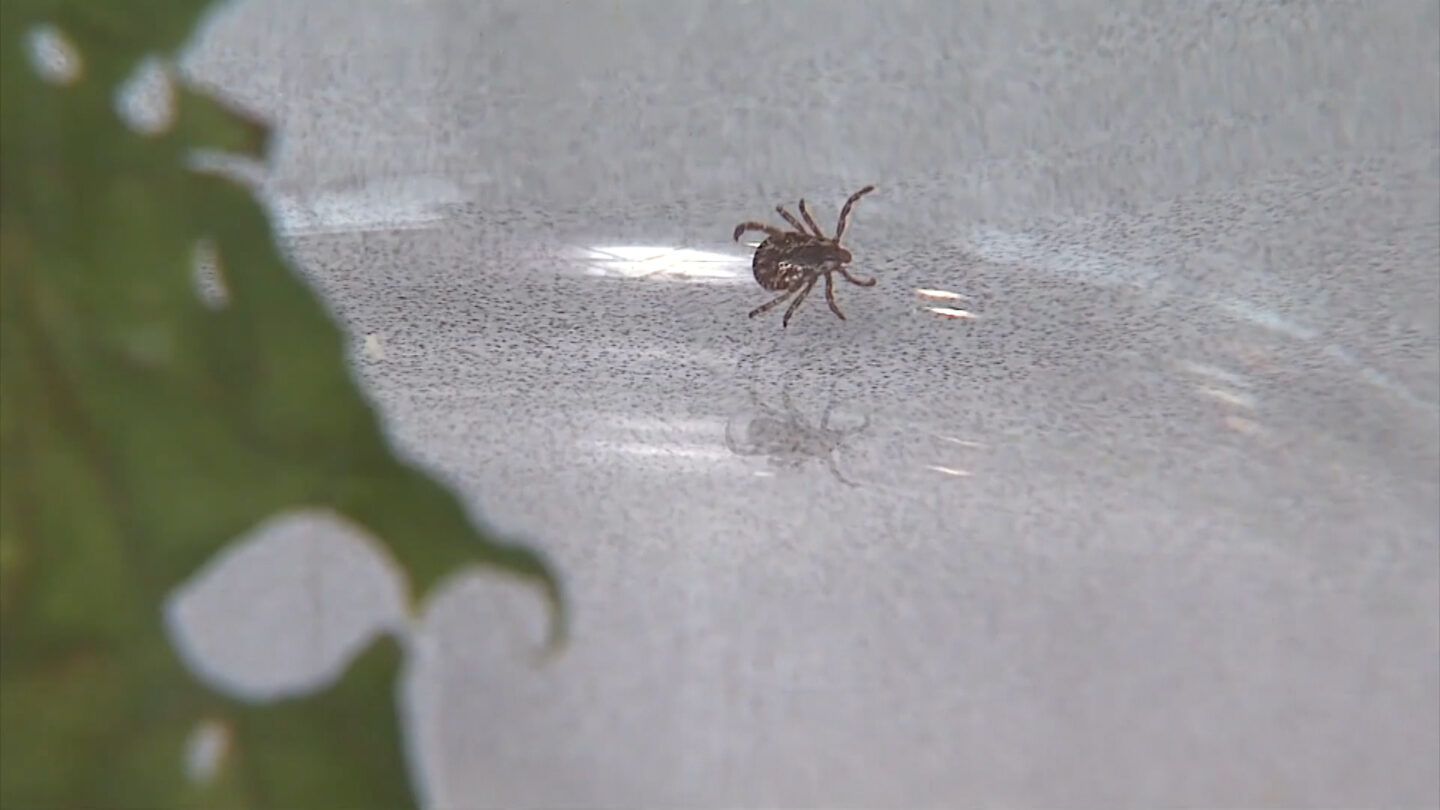

ST. JOSEPH, Mo. (KQTV) -- Missouri is becoming a hot spot for alpha-gal syndrome as the state continues to deal with the increase in ticks.
Alpha-gal syndrome, or AGS, is a serious and potentially life-threatening allergy that can develop after a tick bite. Alpha-gal is a molecule found in most mammals, including cows and pigs, but not in humans.
People with AGS can experience an allergic reaction after eating red meat or coming into contact with products containing alpha-gal.
The symptoms of AGS are hives, swelling and itching. Some people might be limited to gastrointestinal (GI) disturbances like nausea, abdominal cramping or vomiting.
Symptoms for AGS are typically delayed. According to the Centers for Disease Control and Prevention, Symptoms usually appear 2–6 hours after eating red meat or dairy products. They also may appear after exposure to products containing alpha-gal.
"Most other food allergies are based off of proteins and how the food and the body response to them. With alpha-gal, it's sugar-like substances that are linked to fats often times. The body absorbs fat much later in the digestive tract," said Olujimi Jegede, an infectious disease physician at Mosaic Life Care.
Tammy Bennett was bitten by a Lone Star tick last year and started to experience symptoms 2 to 3 weeks after being bitten.
"I ate some cottage cheese, and I realized something was wrong. I could feel the throat swelling," she said. "I ended up in the ER. That's when we began testing, and things like that."
Bennett said living with AGS has been a nightmare, and the food she has to get are expensive.
"Sugars are made up with bone char; it's mixed up, that's why it's white. We can't have normal sugar, we have to have the organic sugar and flour," she said. "The cheeses has no dairy; it's all non-dairy. It's all no mammal."
Bennett said that since she has been diagnosed with AGS, she is no longer able to eat out.
"It's a constant battle, for instance, somebody said, 'Let's go to Char Bar,' and I said, 'No, I can't,' Fumes alone will send me to the ER," she said.
Before she was diagnosed with AGS, she was very social. Now, she says the condition has significantly affected her social life.
"People think I haven't been at places because I can't get there," she said. I've missed funerals, I've missed birthday parties and I've missed weddings. It's hard. Not going to things is difficult.
She experiences nausea and extreme fatigue on a daily basis. She says traveling has also become difficult.
"When we travel, I have to know where the hospitals are. We can't travel overseas right now," she said. "I'm too afraid. What if it happens overseas? I don't know."
Bennett goes to the emergency room at least once a month and spends much of her time in hospitals.
"The fear of what they would give me in an ambulance is real. Post-surgery, they gave me the wrong medication that led me to be in the hospital for another two weeks," she said. "I'm thankful when there's someone on staff that understands alpha-gal. That has gotten better in the past year."
Bennett was very active before being diagnosed, but now she is no longer able to do many of the activities she once enjoyed.
"I can't exercise anymore, and that's really frustrating. I used to do half marathons, I used to go to the gym every day, now I can't. The reaction just from overexertion is a reaction and it knocks me out sometimes for the whole day," she said. "I have where I just lay around here (home) and that's not fun for me and that's not who I am."
Ostrich meat is a safe option for people with AGS. Since ostriches are not mammals, it doesn't have alpha galactose.
Franklin Voorhes, an ostrich farmer, said he has seen increased interest in ostrich products as awareness of alpha-gal syndrome has grown.
"I'm at the point where that's probably going to be almost my only market. Folks with aphla-gal are adamant; they really want to buy ostrich," he said.
Voorhes said he has several customers with alpha-gal syndrome who are surprised to learn how similar ostrich meat is to beef.
"Two of these ostriches are sold to people with aphla-gal syndrome and generally the response is, ' Oh, it is like beef.' There's a little bit of uneasiness to try it the first time," he said. "After folks try it, they are very excited about it."
Voorhes warns people with alpha-gal syndrome to be cautious when eating meals prepared with ostrich meat because of the risk of cross-contamination.
"If you're getting processed ostrich like an ostrich meat stick, then you need to be careful because a lot of ostrich meat sticks still come in a beef casing, and so you'll still get triggered by that casing," he said. "If you are getting a stew you didn't make, a common thing to do is to use beef stock in your ostrich stew, so you have to be careful."
Voorhes recommends cooking ostrich like steak if you're preparing it for the first time. He also suggests watching an old video of Julia Child making beef bourguignon. He says you'll be sold on trying ostrich bourguignon.
Bennett wants people to understand that alpha-gal syndrome is real and can have a significant impact on those living with it.
"It's life-changing, when you get bit by one, follow up with a doctor, believe your body, watch your body," she said.
Jegede offers a few tips on how to protect yourself from tick bites.
"Avoid areas that have high bushes, high grass and shrubs. Wearing clothing that is covering the skin, particularly the legs. Keeping an eye on ticks when you come indoors. Looking at the skin, your scalp, hairline, behind the neck, behind the ears and behind the knees. Looking for places where ticks could hide and looking at clothes as well. You can increase your protection by using tick repellent.
There is currently no cure for alpha-gal syndrome. However, Gov. Mike Kehoe recently signed HB 2372 into law, authorizing the Missouri Department of Health and Senior Services to begin tracking and reporting cases of alpha-gal syndrome.
