What is postpartum psychosis, and what are the signs?


Postpartum psychosis is one of the most serious (but most misunderstood) perinatal mental health conditions. It’s a psychiatric emergency that requires urgent care, yet many people don’t recognize what it can look like. Unfortunately, lack of knowledge, stigma, and fear often delay diagnosis and treatment. What matters most is that it is treatable, and getting help quickly can save lives. No one who experiences it is to blame, and they deserve care, compassion, and support.
Postpartum psychosis involves a disconnect from reality, often accompanied by delusions and hallucinations that make it hard to tell what’s real and what isn’t. While often misunderstood, it’s a serious psychiatric crisis that requires immediate medical attention. Unfortunately, symptoms are sometimes misinterpreted by partners and family members, and the person experiencing them typically lacks the insight into their perceptions and behaviors needed to seek help on their own. That’s why it’s so important for partners and loved ones to know what to watch for and when to seek help, Radial Health reports.
What is postpartum psychosis (PPP)?
Postpartum psychosis, or PPP, is a severe, rapid-onset mental health emergency that can develop after giving birth. It’s also sometimes referred to by other terms like perinatal psychosis and puerperal psychosis.
Unlike the more common “baby blues” or postpartum depression, PPP is a psychiatric crisis that leads to a break with reality. Someone with postpartum psychosis may experience hallucinations (seeing or hearing things that aren’t there), delusions (strongly held false beliefs), and extreme confusion and paranoia. It can happen quickly, starting within days of delivery, though it can begin weeks or months later.
It’s a relatively rare condition, affecting about 1 in 1,000 births. Most people develop symptoms within the first two weeks after giving birth, often around days eight to ten. Symptoms can emerge later, but episodes usually begin sometime within the first three months postpartum.
“Women may appear ‘off’ or unwell at one part of the day and then ‘better’ or like their usual self later on. This waxing and waning mental status is often misunderstood as a sign of improvement, when it’s actually a very concerning and hallmark red flag for postpartum psychosis,” says Katrina Furey, MD, a reproductive psychiatrist who specializes in perinatal mental health.
This can be confusing for loved ones and may delay seeking needed medical attention. Such delays are serious because postpartum psychosis is considered a psychiatric emergency that requires immediate medical attention to ensure that both the parent and baby are safe.
- Because it fundamentally changes a person’s perception of reality, it can affect their judgment and ability to make safe decisions.
- They lack insight into their own perceptions, so they usually can’t recognize they are ill.
- Thoughts of self-harm are common, and delusions often center on the infant. For example, they might believe the baby is in danger or think it needs to be protected in unusual ways. This can lead to high-risk situations that require professional help.
- Symptoms can also progress rapidly. A person might quickly shift from what seems like mild disorientation to full-blown psychosis.
No matter how it presents, it’s important to remember that this is a brain-based illness, not a reflection of a parent’s love for their child. It’s driven by biological and hormonal factors and needs immediate care just like any other medical emergency.
What are the signs and symptoms of postpartum psychosis?
Symptoms of postpartum psychosis can fluctuate in intensity and escalate quickly. Being alert for early signs is key. “Postpartum psychosis often looks less like a ‘primary psychotic disorder’ and more like a severe bipolar-spectrum episode triggered by childbirth, with mania, mixed states, or depression plus psychotic symptoms,” says Greg Malzberg, MD, a psychiatrist at Radial.
These symptoms cause profound disturbances in a person’s thinking, mood, and behavior and include:
Depressive symptoms
- Feeling low, hopeless, or emotionally numb
- Feeling very emotional and crying easily
- Constant worry, tension, and anxiety
- Feeling withdrawn and not wanting to be around others
- Feeling heavy, tired, and overwhelmed
- Losing interest in things that matter to you
- Having problems concentrating or making decisions
- Struggling to take care of yourself or your baby
Manic symptoms
- Feeling unusually energetic, confident, or elevated
- Racing thoughts
- Talking very rapidly or more than usual
- Needing very little sleep or not wanting to sleep
- Being very distracted and jumping from one idea to the next
- Feeling restless or agitated
- Acting impulsively
- Feelings of postpartum rage
Mixed symptoms
- Severe confusion or disorientation
- Seeing, hearing, or feeling things that aren’t there
- Strong beliefs that aren’t based in reality
- Feelings of postpartum paranoia and suspicion
- Believing that others are trying to hurt you
- Acting in ways that seem unusual for you
- Feeling a sense of unreality or detachment
- Dissociation after birth
- Feeling disconnected from the baby
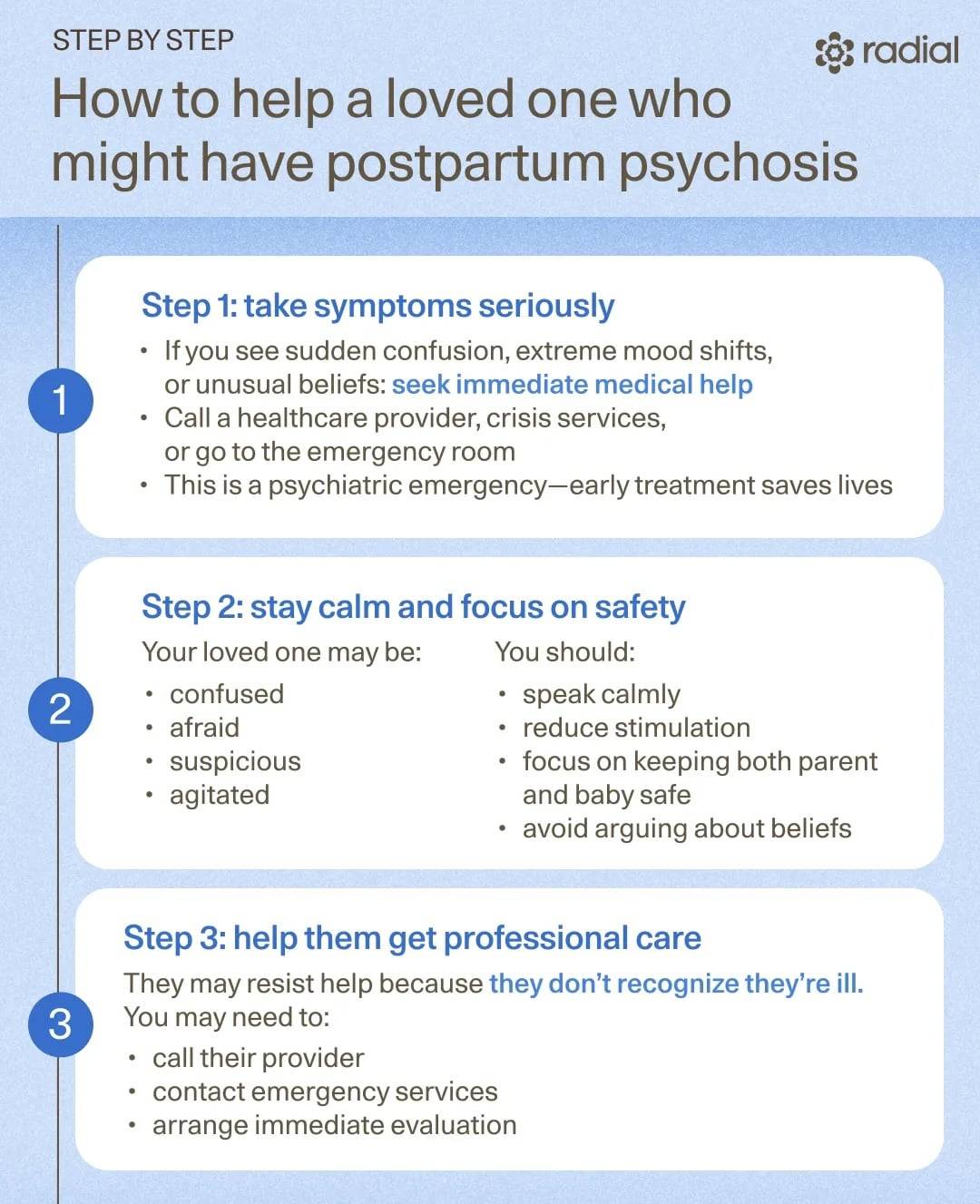
How is postpartum psychosis treated?
Postpartum psychosis is a psychiatric emergency. Immediate care is crucial. Symptoms can escalate rapidly, leaving the person and sometimes their baby at risk.
If you suspect someone is experiencing postpartum psychosis:
- Seek emergency care right away by going to the closest ER or calling emergency services
- If you are in the U.S., call the 988 Suicide and Crisis Lifeline, which is available 24/7 for urgent mental health support
If you are concerned about another person, whether it’s your partner, a loved one, or a friend, remember that it’s appropriate to seek help even if they say they are fine. People with postpartum psychosis often lose insight into their own perceptions and behaviors, so if things seem off, talking to a professional is the best course of action.
Treatments include:
Inpatient treatment: Most people with postpartum psychosis require hospitalization, at least early on. This might involve:
- Inpatient psychiatric treatment to provide rapid stabilization
- Medication adjustments in a safe, closely monitored environment
Medications: Medications are a cornerstone of treatment for postpartum psychosis, particularly during the acute phase, where they can bring symptoms under control and provide the stability needed for further recovery. The exact approach can vary depending on the symptoms, the individual’s medical history, and whether someone is breastfeeding. Medications that may be prescribed include:
- Antipsychotic medications help reduce delusions, hallucinations, and confusion.
- Mood stabilizers may help when manic symptoms are present.
- Benzodiazepines are sometimes used to address severe agitation, anxiety, or insomnia.
Electroconvulsive Therapy (ECT): ECT is a well-established, safe, and highly effective treatment for severe psychotic and mood disorders, including postpartum psychosis. While stigma persists, of available treatments, ECT remains the most effective intervention for postpartum and peripartum psychosis.
Emerging neuromodulation options
Treatments like transcranial magnetic stimulation (TMS) and related neuromodulation techniques are being investigated as potential treatments for some postpartum mental health conditions, such as peripartum depression, but are not treatments for PPP.
The bottom line
Postpartum psychosis is rare, serious, and often frightening, both for the person experiencing it and for the people who love them. The key thing to remember is that it is also highly treatable. Timely care is crucial to ensuring that mom and baby are safe, so being aware of early symptoms can help people get help as soon as possible.
Anyone can experience psychosis after pregnancy, but your risk is higher if you have a history of bipolar disorder. If something feels “off” after childbirth in a way that doesn’t seem like it can be explained by the normal exhaustion and mood swings that happen in the postpartum period, help isn’t just warranted—it can be a lifesaving first step toward recovery.
Healing takes time, so give yourself grace. Postpartum psychosis is not a reflection of a mother’s love or worth—it’s a medical condition that requires care and support. Getting help and healing from the experience is a testament to your strength and resilience.
This story was produced by Radial Health and reviewed and distributed by Stacker.
